
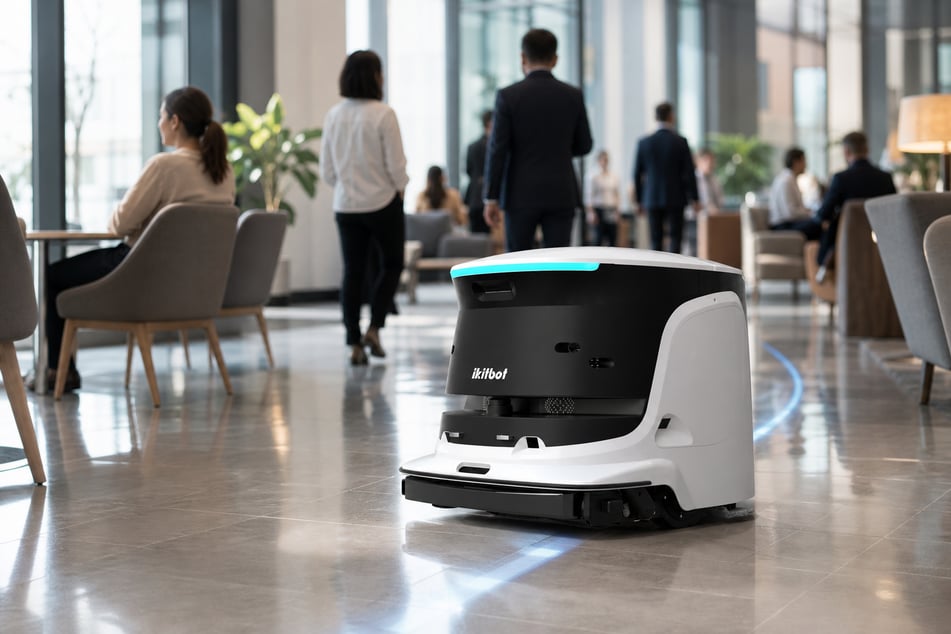
Autonomous floor cleaning robots are transforming facilities management by delivering consistent cleaning results while addressing staff shortages and reducing operational costs across commercial environments.
The Growing Pressure on Modern Facility Management Teams
Facility management teams across commercial environments face unprecedented operational challenges. Staff shortages, rising labour costs, and increasing expectations for hygiene standards create mounting pressure on teams already stretched thin. High-turnover roles in cleaning and maintenance make it difficult to maintain consistent service levels, whilst the repetitive nature of floor cleaning tasks diverts skilled personnel from more complex, value-added work that requires human judgement and expertise.
The challenge extends beyond mere staffing concerns. Facilities managers must demonstrate measurable improvements in operational efficiency whilst simultaneously reducing costs and maintaining—or improving—cleaning standards across large, often multi-site operations. Traditional approaches to floor cleaning rely heavily on manual labour, which introduces variability in coverage, quality, and resource consumption. These pressures have led forward-thinking organisations to explore automation not as a replacement for their teams, but as a strategic enhancement to existing capabilities.
Autonomous floor cleaning robots represent a practical response to these challenges. Rather than displacing facility management professionals, these systems augment human teams by handling repetitive, time-consuming tasks with precision and consistency. This allows facilities staff to focus on complex maintenance issues, customer service, strategic planning, and areas requiring nuanced decision-making—activities where human expertise delivers the greatest value to the organisation.
Precision Navigation and Safety Features That Enable Autonomous Operation
Modern autonomous floor cleaning robots utilise sophisticated multi-sensor fusion technology to navigate safely and efficiently through complex commercial environments. Industry-leading systems incorporate 50-metre 3D LiDAR combined with additional sensor arrays, enabling real-time detection and navigation around people, furniture, and unexpected obstacles. This advanced sensing capability ensures the robots operate safely in high-traffic areas without disrupting daily operations or posing risks to staff, customers, or visitors.
The intelligent path planning algorithms ensure centimetre-accurate coverage whilst optimising cleaning routes for maximum efficiency. These systems create detailed spatial maps of facilities, enabling consistent, repeatable cleaning patterns that eliminate gaps or missed areas common with manual cleaning approaches. Edge sensing and obstacle avoidance systems provide multiple layers of safety, allowing the robots to work autonomously during occupied hours with minimal supervision.
Beyond basic navigation, these systems adapt their operational behaviour to environmental conditions. Intelligent cleaning optimisation adjusts overlap, water output, and operational modes based on floor type, soil levels, and traffic patterns. This adaptive approach maximises cleaning performance whilst reducing water and chemical consumption—delivering both operational and environmental benefits without requiring constant human intervention.
Reducing Labour Costs While Maintaining Consistent Cleaning Standards
Autonomous floor cleaning robots deliver substantial long-term cost savings by transforming how facility management teams allocate their resources. Rather than eliminating positions, these systems address the persistent challenge of recruiting and retaining staff for repetitive cleaning roles. The robots handle routine floor maintenance autonomously, freeing existing team members to focus on specialised tasks such as detailed sanitation, equipment maintenance, and responding to immediate facility needs that require human judgement.
The economic advantage extends beyond direct labour savings. Consistent, automated cleaning reduces the costs associated with staff training, shift coverage variability, and the quality inconsistencies that emerge from fatigue or rushed work. Autonomous systems deliver reliable results every shift with minimal human involvement, ensuring floors meet specified hygiene standards regardless of time of day or staffing levels. This reliability proves particularly valuable in environments with stringent cleanliness requirements or high foot traffic.
Advanced systems like the iKitbot UVC disinfection robot further enhance standards by incorporating continuous UV-C sterilisation technology. This capability addresses infection control concerns that have become increasingly critical in commercial facilities, healthcare environments, and public spaces. By automating both routine floor cleaning and enhanced disinfection, facilities teams maintain elevated hygiene standards without proportional increases in labour requirements—achieving more with existing resources.
The predictable operational costs associated with autonomous cleaning systems enable more accurate budgeting and forecasting. Flexible ownership options, including robotics-as-a-service subscription models, eliminate large upfront capital investments whilst providing predictable monthly costs that simplify financial planning. This approach transforms cleaning automation from a significant capital expenditure into an operational expense with measurable return on investment.
Fleet Management and Remote Monitoring for Multi-Site Operations
Managing autonomous cleaning operations across multiple locations presents unique challenges that sophisticated fleet management platforms address directly. Centralised systems like FieldBots enable facilities managers to monitor and control every cleaning robot from a single interface, regardless of manufacturer or model. This unified approach provides operational visibility across entire portfolios, transforming scattered operational data into actionable insights and strategic recommendations.
App-based management and remote access capabilities allow facilities teams to adjust cleaning schedules, monitor performance metrics, and respond to operational issues without physical presence at each location. This remote operational control proves particularly valuable for multi-site service providers and large commercial estates where travelling between locations consumes significant time and resources. Teams can optimise cleaning patterns, schedule operations during low-traffic periods, and verify coverage without manual inspections.
The data-driven insights generated by fleet management platforms enable continuous operational improvement. Performance metrics, coverage maps, and resource consumption data help facilities managers identify optimisation opportunities, demonstrate service levels to stakeholders, and make evidence-based decisions about deployment strategies. Automated reporting simplifies compliance documentation and provides the transparency increasingly demanded by building occupants and regulatory frameworks.
Integration capabilities ensure autonomous cleaning systems work seamlessly within existing facility management ecosystems. Automated docking, charging, and optional automatic water refills enable continuous operation with minimal manual intervention. This level of automation allows facilities teams to deploy robots that operate independently overnight or during quiet periods, maximising cleaning coverage whilst minimising disruption to core business operations.
Implementing Autonomous Cleaning with Minimal Disruption
The pathway to implementing autonomous cleaning solutions has been streamlined to minimise operational disruption. Comprehensive site assessments identify the most suitable technology for specific environments and cleaning requirements, ensuring selected systems align with facility characteristics, traffic patterns, and operational objectives. Many providers offer obligation-free site visits across the UK, allowing facilities managers to explore automation possibilities without commitment.
Installation and training processes have been refined to enable rapid deployment. Many autonomous cleaning implementations complete installation and staff training within a single day, allowing facilities to realise operational benefits immediately. This rapid implementation timeline proves critical for organisations seeking to address staffing shortages or capacity constraints without extended transition periods that might compromise service levels.
The flexibility of modern autonomous cleaning solutions accommodates facilities at various stages of their automation journey. Organisations can begin with a single robot to validate the technology and operational fit before expanding to fleet-level deployments. Scalable solutions grow alongside facility requirements, with the ability to add capacity incrementally as needs evolve or new sites come online. This scalability ensures automation investments remain aligned with business growth and changing operational demands.
Ongoing support and maintenance agreements provide the expertise and reliability that facilities teams require. UK-based support teams offer dedicated guidance, maximising long-term performance through training and responsive technical assistance. This partnership approach means facilities managers gain not just technology, but a committed automation partner invested in their operational success. The combination of proven technology, flexible implementation options, and expert support enables facilities teams to adopt commercial cleaning robot automation easily and cost-effectively—enhancing their capabilities without replacing the skilled professionals who remain essential to comprehensive facility management.